
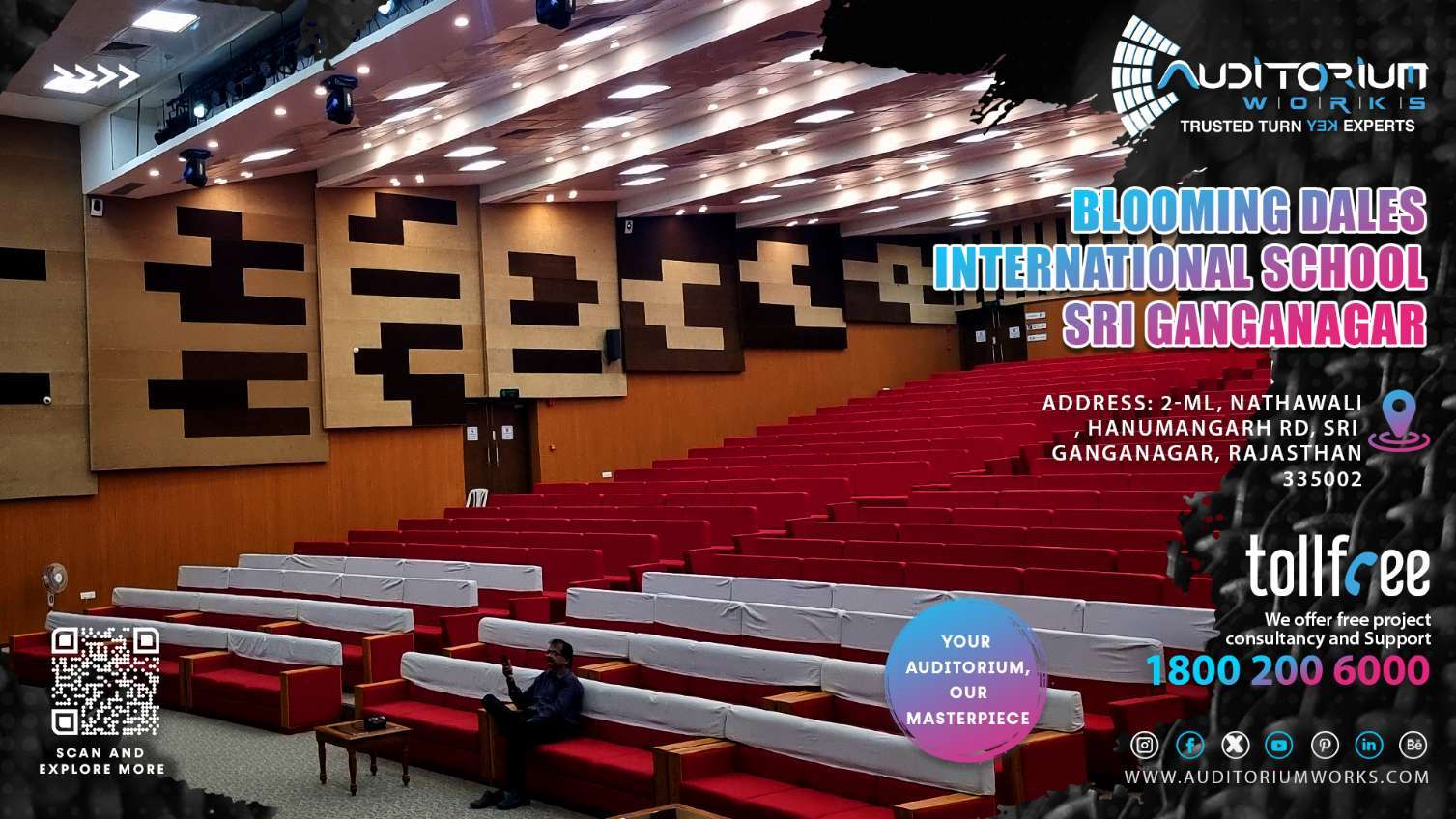

Welcome to the ultimate guide to auditorium acoustics! Whether you’re planning a new performance space, renovating an existing one, or simply seeking to improve the sound quality of your venue, understanding the principles of acoustics is paramount. This handbook provides a comprehensive overview of the factors influencing sound within auditoriums, offering practical advice and insights for achieving optimal acoustic performance.
Understanding the Fundamentals of Auditorium Acoustics
Auditorium acoustics is a multifaceted field that combines architectural design, material science, and a deep understanding of sound propagation. It’s not just about eliminating echoes; it’s about creating an environment where every audience member enjoys a clear, balanced, and immersive sound experience. Key elements to consider include sound absorption, reflection, diffusion, and isolation.
Sound Absorption: Controlling Reverberation
Sound absorption is the process by which materials convert sound energy into other forms of energy, such as heat. In an auditorium, excessive reverberation (the persistence of sound after the original source has stopped) can lead to muddied speech intelligibility and a general degradation of the listening experience. Strategically placed sound-absorbing materials, such as acoustic panels, fabrics, and specialized ceiling tiles, are crucial for controlling reverberation time (RT60).
Different materials exhibit varying degrees of sound absorption at different frequencies. Understanding the absorption coefficients of materials is essential for selecting the right solutions for your specific auditorium needs. Low-frequency absorption is particularly challenging, often requiring thicker, more specialized treatments like bass traps.
Sound Reflection: Directing Sound Effectively
While absorption is vital for controlling reverberation, reflection plays a crucial role in distributing sound evenly throughout the auditorium. Hard, reflective surfaces, such as walls and ceilings, can be strategically angled to direct sound energy towards audience members who might otherwise be in “shadow zones” where sound is weak or muffled. These reflections, known as early reflections, arrive shortly after the direct sound and contribute to clarity and intelligibility.
However, uncontrolled reflections can create undesirable echoes or flutter echoes, particularly in spaces with parallel walls. Careful design and the judicious use of diffusers are necessary to manage reflections effectively.
Sound Diffusion: Creating a Uniform Sound Field
Sound diffusion scatters sound energy in multiple directions, creating a more uniform and enveloping sound field. Diffusers, often characterized by their irregular surfaces, prevent strong reflections and reduce the likelihood of acoustical “hot spots” and “dead spots.” They also contribute to a sense of spaciousness and envelopment, enhancing the overall listening experience.
Common diffuser types include quadratic residue diffusers (QRDs), which use mathematical sequences to scatter sound, and skyline diffusers, which feature a more random, three-dimensional surface. The effectiveness of a diffuser depends on its size and the frequency range of the sound it’s intended to scatter.
Sound Isolation: Preventing Noise Intrusion
Effective sound isolation is critical for preventing unwanted noise from entering or leaving the auditorium. External noise sources, such as traffic, aircraft, or adjacent spaces, can significantly detract from the listening experience. Internal noise sources, such as mechanical equipment or backstage activity, must also be controlled to ensure a quiet and focused environment for performers and audience members.
Sound isolation techniques include increasing the mass of walls and ceilings, creating air gaps between structural elements, and sealing all potential sound leaks. Double-wall construction, resilient channels, and damping materials are commonly used to reduce sound transmission.
Auditorium Design Considerations for Optimal Acoustics
The acoustic design of an auditorium should be integrated into the architectural design from the earliest stages of planning. Ignoring acoustic considerations until the construction phase can lead to costly and often less effective retrofits.
Shape and Volume
The shape and volume of the auditorium have a significant impact on its acoustic properties. Fan-shaped or rectangular halls generally provide better sound distribution than circular or irregular shapes. The volume of the auditorium should be appropriate for the type of performances it will host. Larger volumes tend to require more sound reinforcement to achieve adequate loudness, while smaller volumes can be prone to excessive reverberation.
Seating Arrangement
The seating arrangement influences sound distribution and sightlines. Steeper seating rakes provide better sightlines and can also improve sound quality by reducing sound absorption from audience members. Wide seating areas should be avoided, as they can lead to uneven sound coverage.
Surface Materials
The choice of surface materials is crucial for controlling reverberation and reflection. Hard, reflective materials like concrete and glass should be balanced with sound-absorbing materials like fabric-covered panels and perforated metal. The strategic placement of these materials is essential for achieving the desired acoustic characteristics.
Acoustic Treatment Options for Auditoriums
A wide range of acoustic treatment options are available for auditoriums, each with its own strengths and weaknesses. Selecting the right treatments depends on the specific acoustic challenges and the desired aesthetic.
Acoustic Panels
Acoustic panels are a versatile and effective solution for controlling reverberation. They typically consist of a sound-absorbing core material, such as fiberglass or mineral wool, wrapped in fabric. Acoustic panels can be mounted on walls, ceilings, or hung as baffles.
Bass Traps
Bass traps are designed to absorb low-frequency sound, which is often difficult to control with conventional acoustic treatments. They are typically placed in corners or along walls to reduce standing waves and improve bass clarity.
Diffusers
Diffusers scatter sound energy in multiple directions, creating a more uniform and enveloping sound field. They are often used in conjunction with acoustic panels to balance absorption and diffusion.
Acoustic Curtains
Acoustic curtains are heavy, sound-absorbing drapes that can be used to control reverberation and block sound. They are often used in theaters and concert halls to adjust the acoustic environment for different types of performances.
Resonators
Resonators are tuned to absorb sound at specific frequencies. They can be used to address particular acoustic problems, such as flutter echoes or excessive resonance.
Testing and Optimization of Auditorium Acoustics
Once the auditorium is built or renovated, it’s essential to test and optimize the acoustic performance. This typically involves measuring reverberation time (RT60), speech intelligibility (STI), and other acoustic parameters.
Reverberation Time (RT60) Measurement
Reverberation time (RT60) is the time it takes for sound to decay by 60 decibels after the sound source has stopped. It’s a crucial metric for evaluating the acoustic characteristics of a room. Optimal RT60 values vary depending on the size of the auditorium and the type of performances it will host.
Speech Intelligibility (STI) Measurement
Speech intelligibility (STI) measures how clearly speech can be understood in a room. It’s a critical factor for lecture halls, theaters, and other venues where clear communication is essential. STI can be measured using specialized acoustic measurement equipment or estimated using computer simulations.
Acoustic Modeling and Simulation
Acoustic modeling and simulation software can be used to predict the acoustic performance of an auditorium before it is built or renovated. This allows designers to optimize the design and select the most appropriate acoustic treatments.
The Role of an Acoustic Consultant
Achieving optimal acoustics in an auditorium requires specialized knowledge and experience. An acoustic consultant can provide valuable expertise throughout the design, construction, and optimization process. They can help you to:
- Identify potential acoustic problems
- Develop effective acoustic solutions
- Select the right acoustic treatments
- Test and optimize the acoustic performance
Investing in acoustic consulting services can save you time, money, and frustration in the long run. A well-designed auditorium with excellent acoustics will enhance the listening experience for performers and audience members alike, creating a more enjoyable and memorable event.